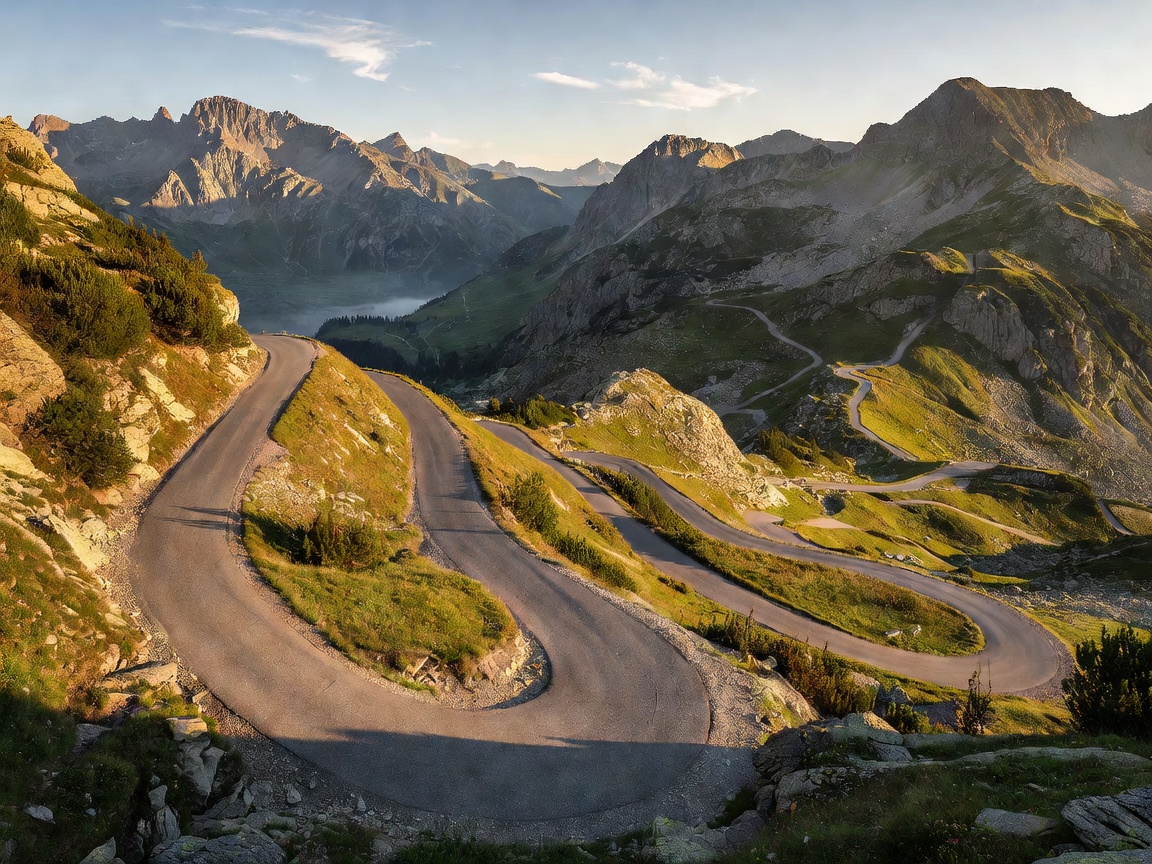
Route Overview & Touring Heritage
Inaugurated in 1913 by the Touring Club de France, the Route des Grandes Alpes is widely considered the supreme grand touring route in Western Europe. Over 720 kilometers of asphalt, the route links Lake Geneva (Lac Léman) to the Mediterranean Sea, accumulating over 16,000 meters of cumulative vertical elevation gain.
The expedition threads through four French national and regional parks (Chablais, Vanoise, Écrins, and Mercantour), traversing six of the ten highest paved mountain passes in Europe.
Logistics Window & Pass Openings
Due to heavy winter snowpack, high summit passes like Col de l’Iseran and Col du Galibier rarely open before mid-June and close by mid-October. The golden driving window is from late June to late September.
Key Stages & Signature Passes
Stage 1: Chablais & Mont Blanc Foothills (Thonon to Bourg-Saint-Maurice)
Starting at Thonon-les-Bains on Lake Geneva, the route climbs through the Gorges du Pont du Diable before conquering Col des Gets (1,170 m), Col de la Colombière (1,613 m), and Cormet de Roselend (1,968 m) with its vivid turquoise reservoir lake.
Stage 2: The Roof of the Alps (Bourg-Saint-Maurice to Briançon)
The most demanding alpine sector of the route:
- Col de l'Iseran (2,770 m): The highest paved mountain pass in the Alps, ascending through Val d’Isère with views of the Pissaillas Glacier.
- Col du Télégraphe (1,566 m) & Col du Galibier (2,642 m): Legendary Tour de France climb overlooking the La Meije massifs.
- Col du Lautaret (2,058 m): Wide high-speed Alpine corridor descending into the UNESCO fortress city of Briançon.
Stage 3: Southern Alps & Maritime Descent (Briançon to Menton / Nice)
Passing Col d'Izoard (2,360 m) with its surreal lunar scree slopes (Casse Déserte), Col de Vars (2,109 m), and Cime de la Bonette (2,802 m loop), before dropping through the hairpin-rich Col de Turini (1,607 m)—famed for the Monte Carlo Rally—to finish at the Mediterranean shore.
French Regulations & Low-Emission Stickers
When entering the Côte d’Azur or metropolitan transit zones around Nice, drivers must display a valid French Crit'Air emissions vignette on the lower right of the windscreen. Radar speed enforcement on departmental roads (D-roads) is strictly set at 80 km/h unless posted otherwise.